
Systems Mapping Project
In this semester-long project, I examined how algorithm-driven, short-form media platforms shape youth wellbeing, with a focus on attention, emotional regulation, and self-image. Rather than framing digital wellbeing as an individual responsibility, this project approached the issue as a systemic design problem influenced by platform incentives, power structures, and attention-based architectures. My process emphasized critical research, ethical analysis, and visual synthesis to make complex systems legible for both academic and public audiences.
The Problem:
Youth enter digital platforms seeking connection, identity, and validation, yet algorithm-driven systems transform these needs into points of exploitation. Features such as personalized feeds, infinite scroll, and reward-based interaction loops reinforce compulsive use, emotional dysregulation, and attention fragmentation. While these impacts are often framed as personal failures of self-regulation, the root causes lie upstream in platform design choices and corporate incentives. This project reframes youth digital wellbeing as a systemic issue rather than an individual one.
Research & Understanding the System
To ground my analysis, I conducted an extensive literature review across psychology, digital wellbeing, policy, and design ethics, supported by subject matter expert interviews and reflective fieldwork. I examined how attention economies, algorithmic reward systems, and social comparison dynamics interact with adolescent developmental vulnerabilities. A positionality statement guided my approach, acknowledging how my background as a Gen Z information design student shaped both my perspective and ethical responsibilities when analyzing youth-focused systems.
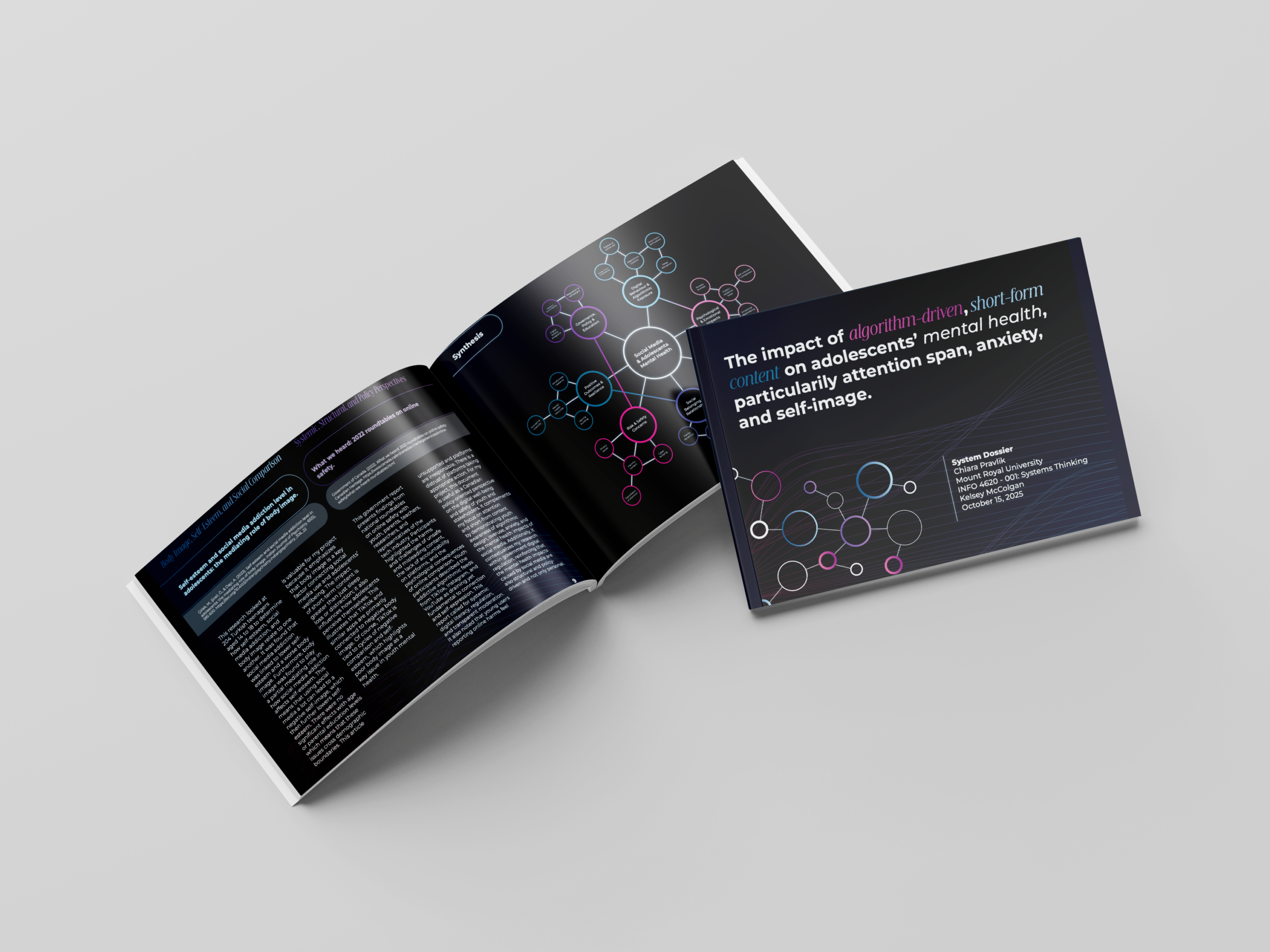
To view my research dossier, click here!
Mapping the System:
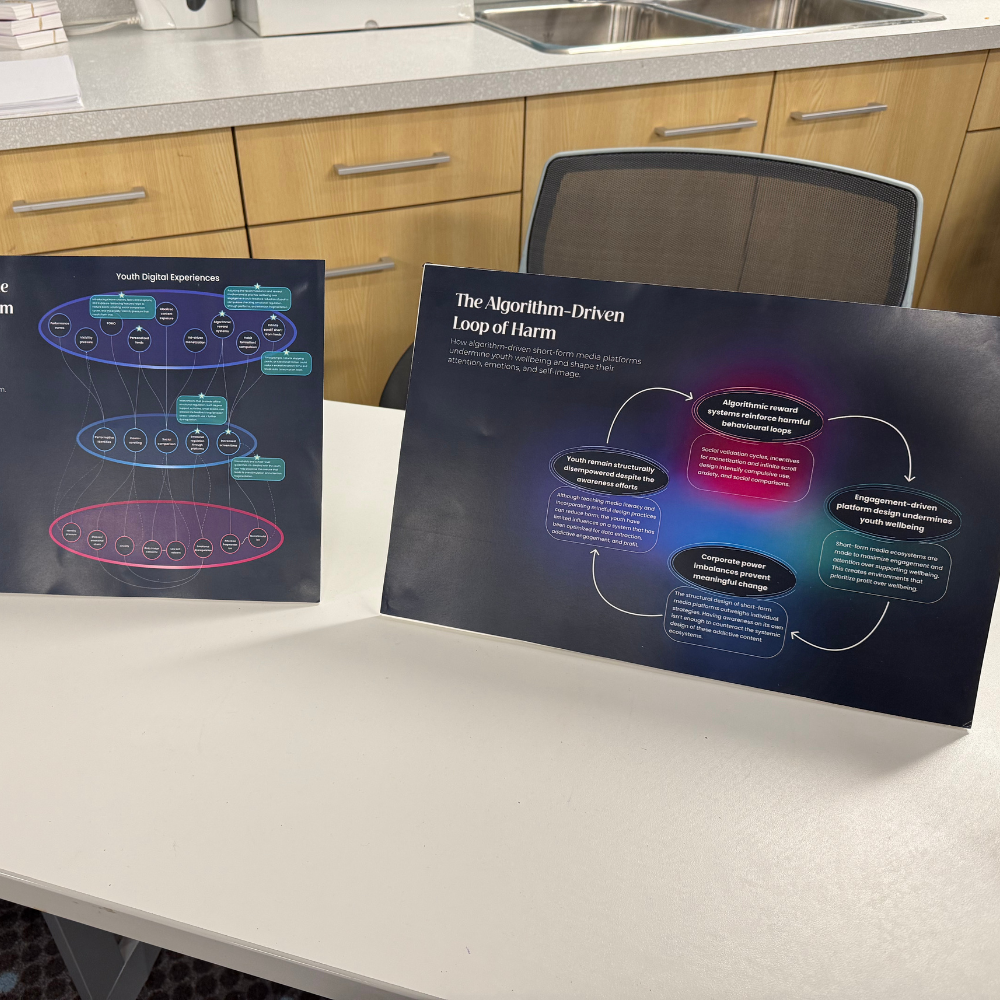
I translated my research into a series of interconnected system maps designed to explain complexity without overwhelming the viewer. Each map served a distinct purpose while contributing to a cohesive narrative about how harm is produced and sustained.
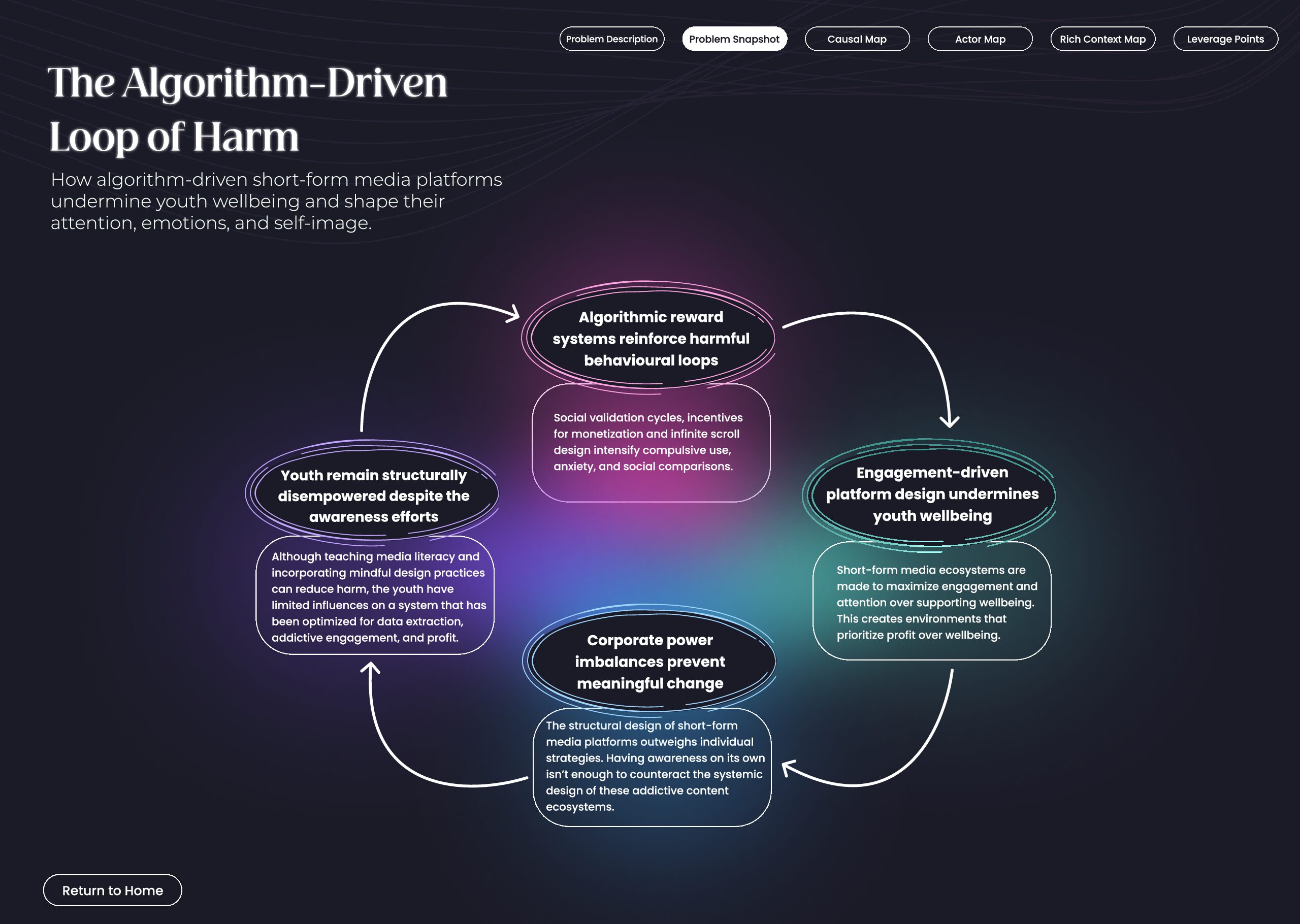
1. Problem Snapshot
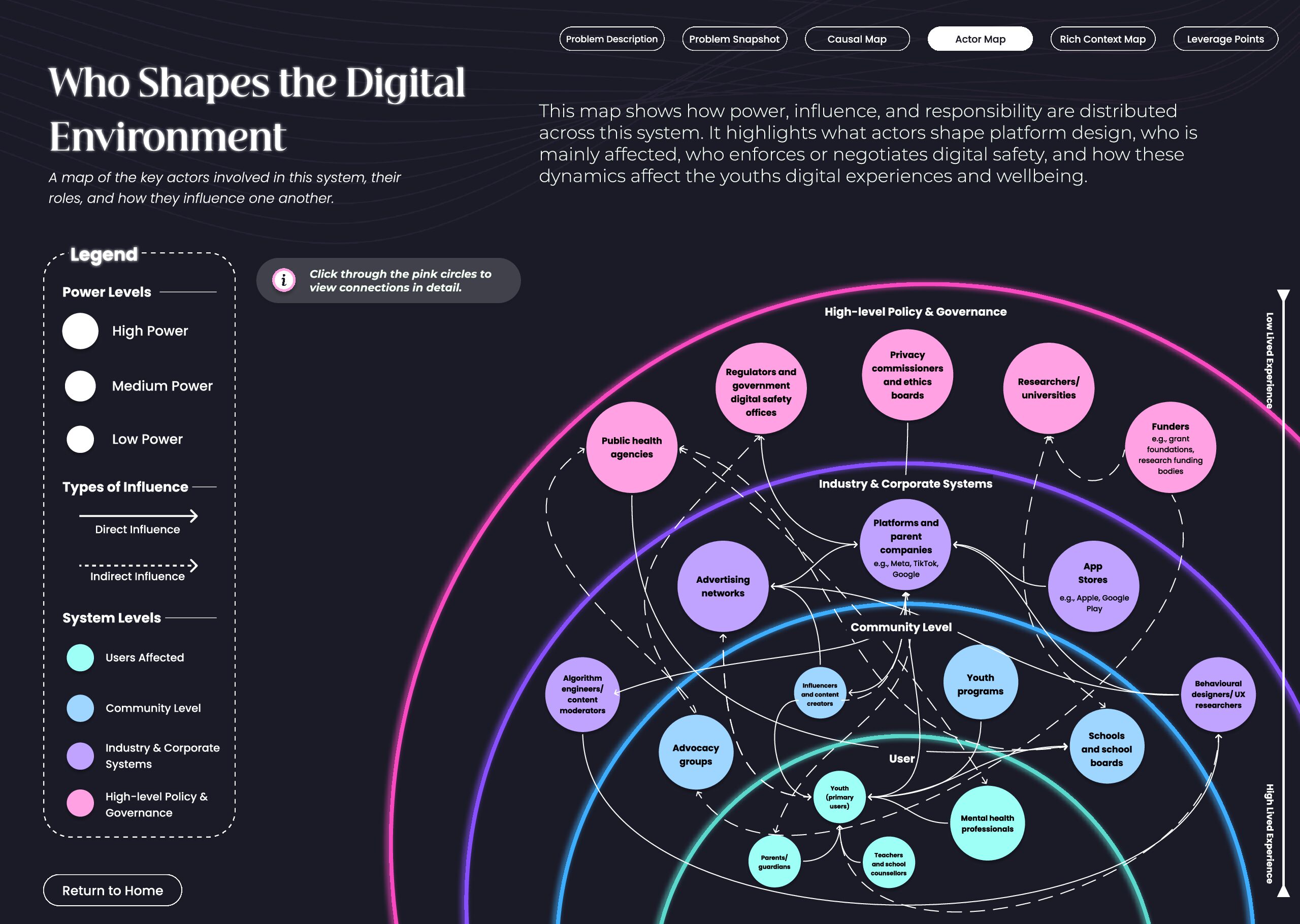
2. Actor Map
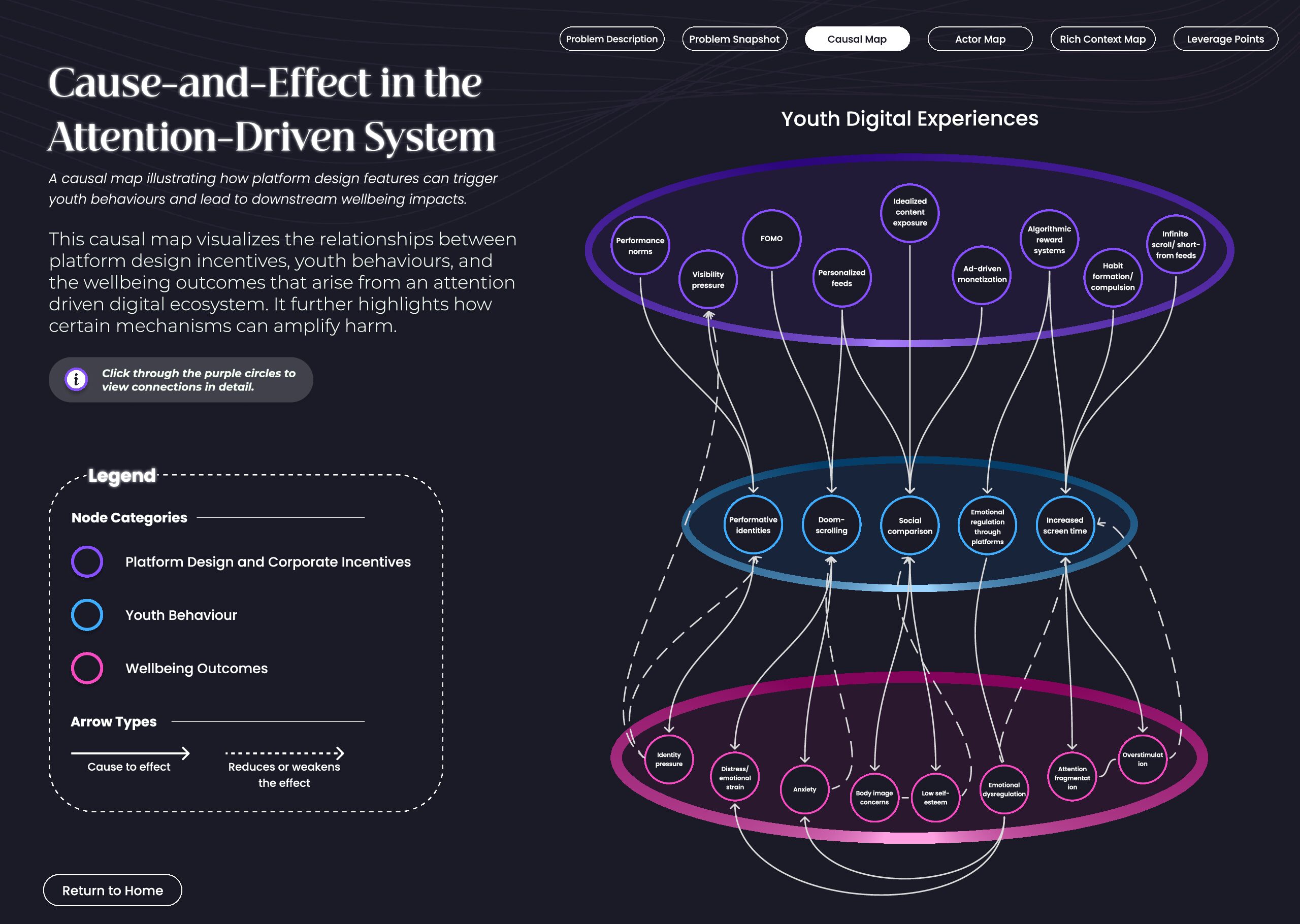
3. Causal Map
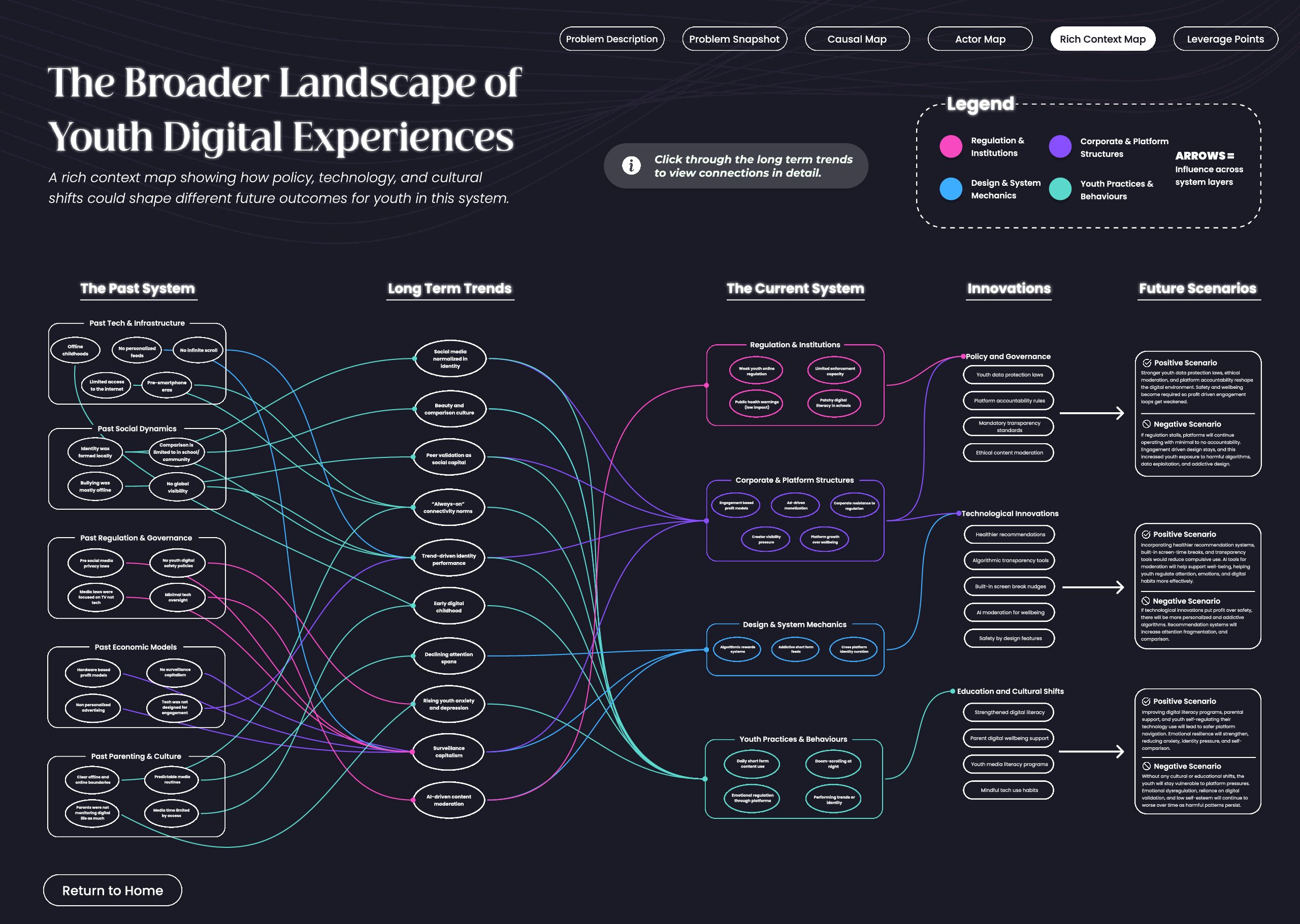
4. Rich Context Map
5. Leverage Points
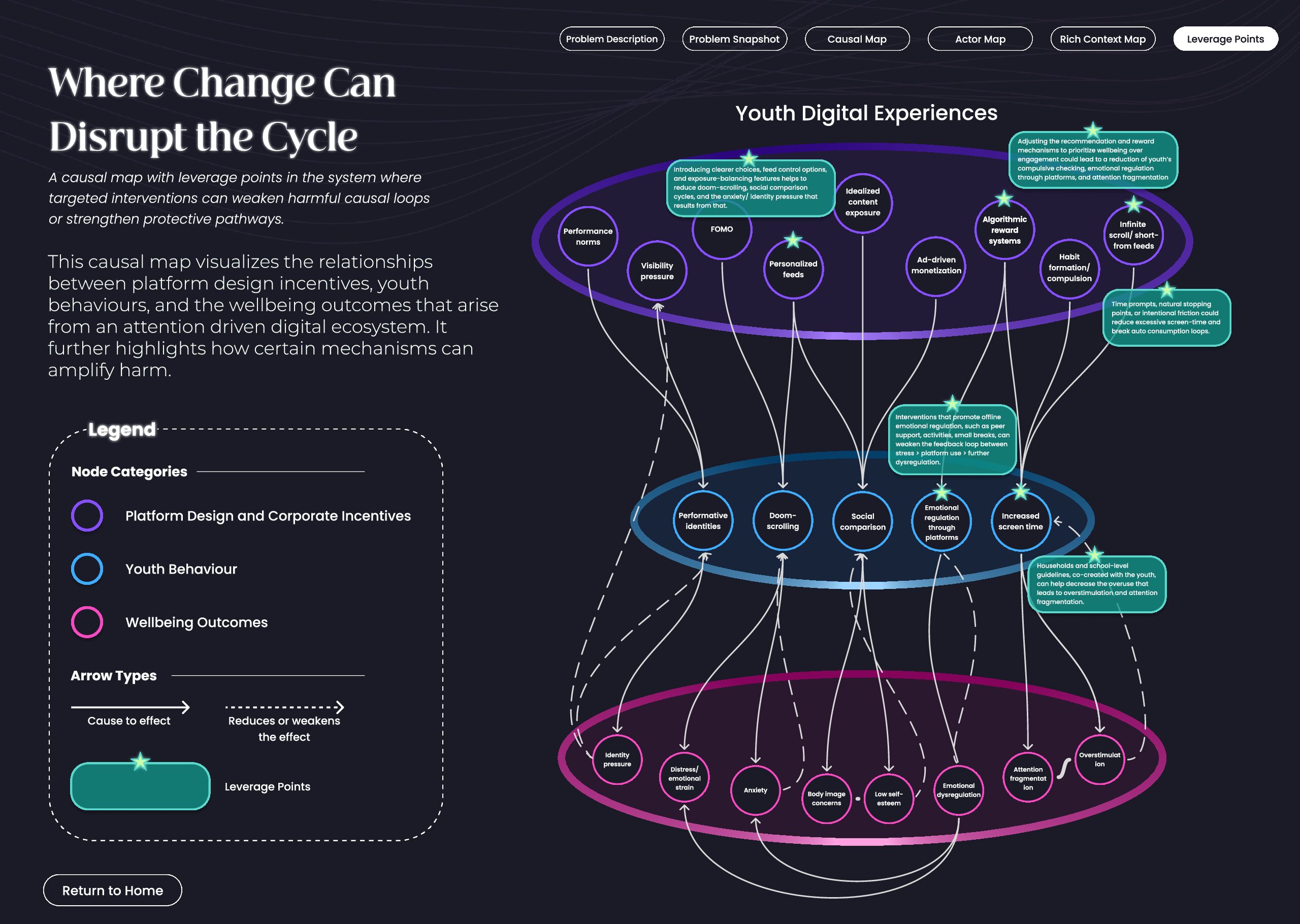
View interactive digital version here:
Showcase & Interaction Design
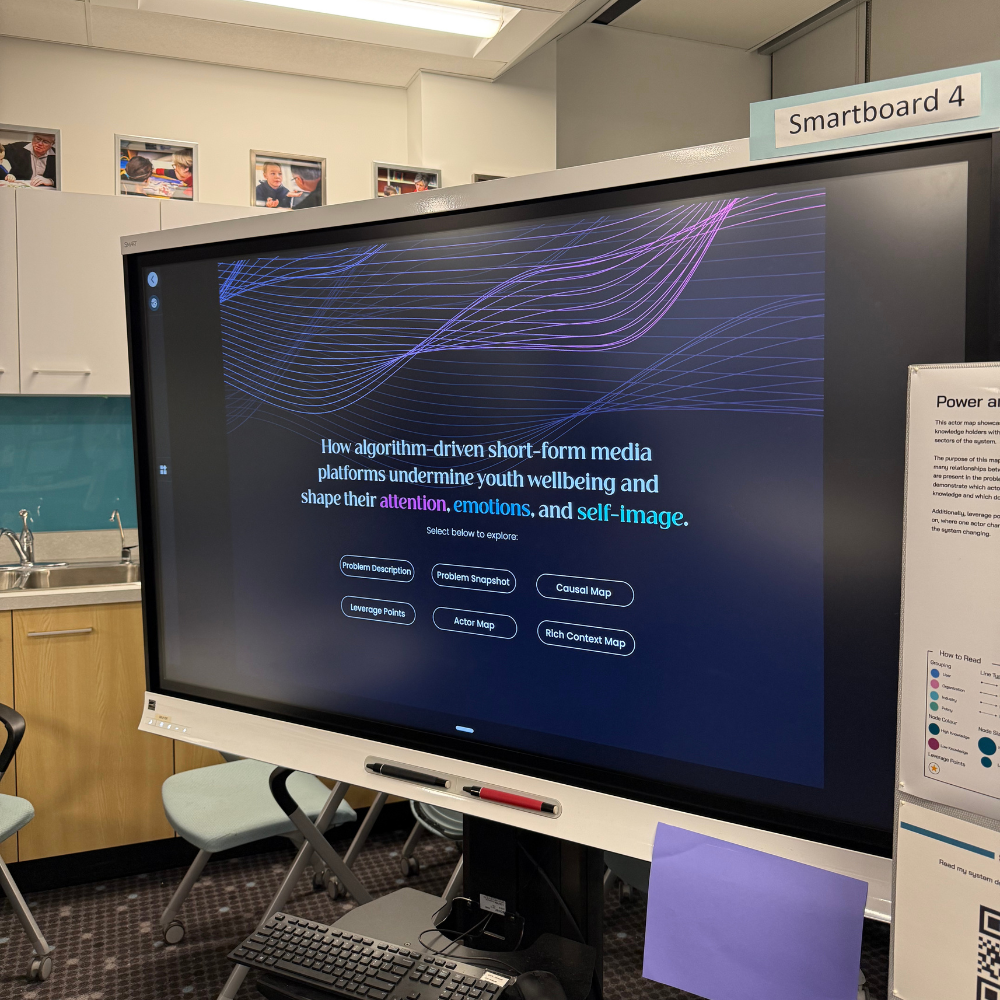
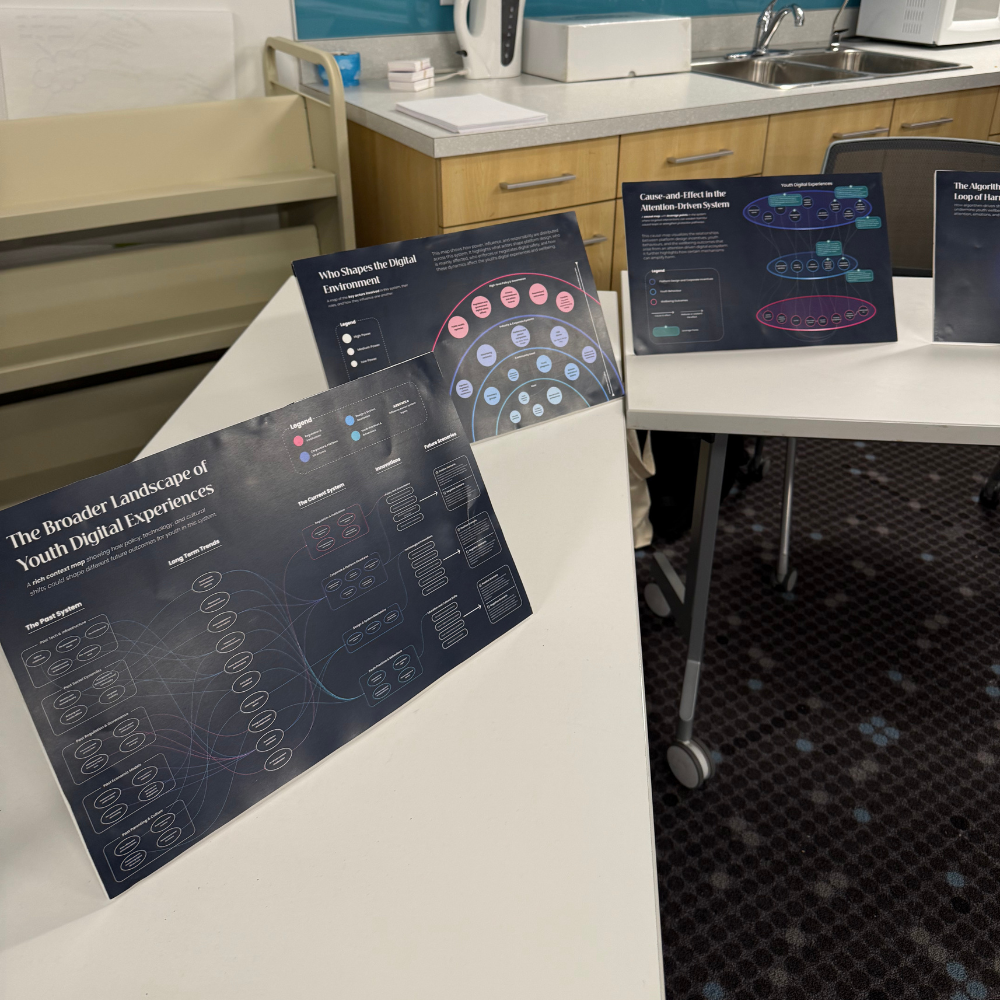
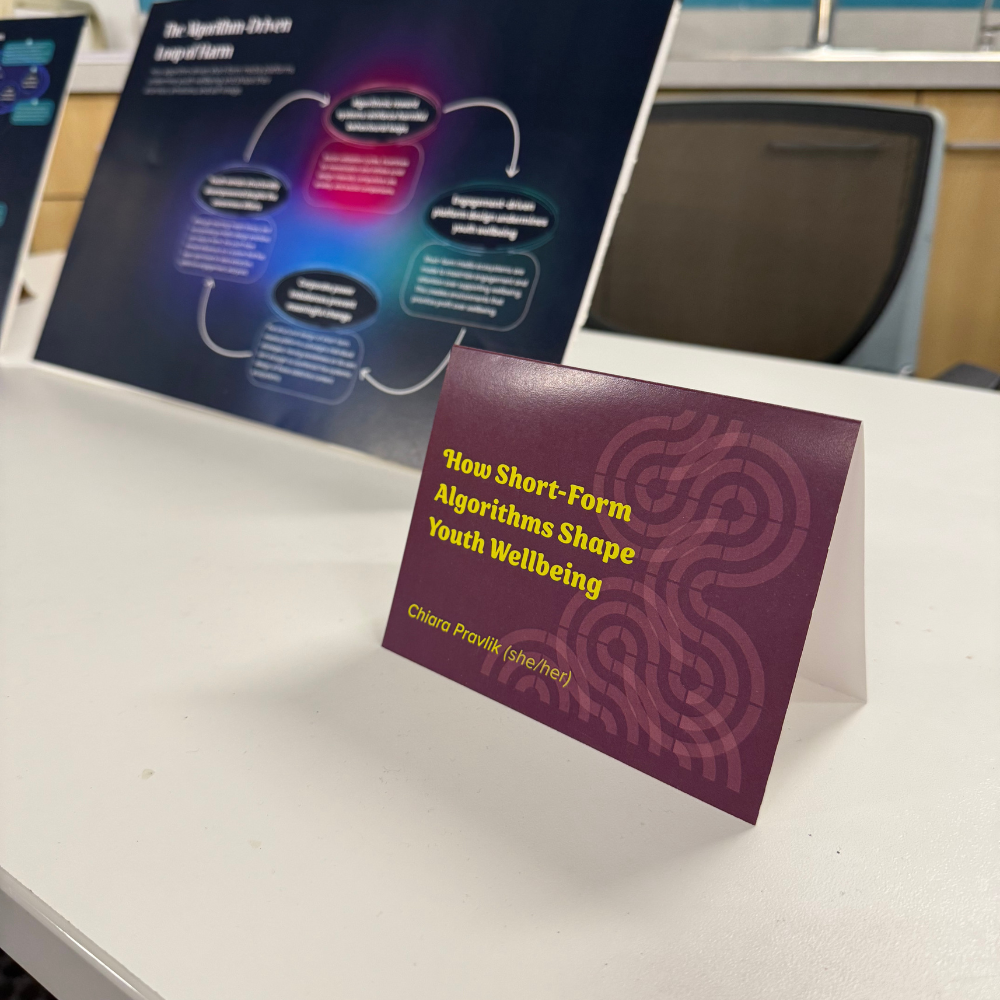
This work culminated in a public-facing mapping showcase that combined printed system maps, a digital interactive interface, and a physical research dossier. The exhibit was designed to support multiple levels of engagement, from quick visual entry points to deeper exploratory interactions. By allowing viewers to navigate connections themselves, the showcase encouraged active sense-making rather than passive consumption.
Results and Impact
This project translated complex, interdisciplinary research into a coherent set of system maps that revealed how algorithm-driven platforms structurally shape youth attention, emotions, and self-image. By visualizing power dynamics, feedback loops, and leverage points, the work helped reframe digital wellbeing from an individual responsibility to a systemic design issue. The resulting maps supported multiple modes of engagement, allowing viewers to quickly grasp core insights or explore deeper connections. Through public exhibition and interactive exploration, this project increased awareness of how platform design decisions accumulate downstream impacts on youth wellbeing and highlighted where meaningful intervention could occur.
Final Thoughts
This project challenged me to balance analytical rigor with emotional clarity while designing for a complex and sensitive topic. Navigating the scale of the system required careful decisions about scope, hierarchy, and visual framing to avoid oversimplification without overwhelming the audience. Designing for both academic critique and public engagement strengthened my ability to communicate complexity with intention. Ultimately, this experience reinforced the role of information design as a tool for revealing hidden structures, questioning dominant narratives, and supporting more ethical and humane approaches to technology design.