Design Process | Team Project

In this team project, we explored solutions to foster climate-conscious behaviour change among MRU students. Recognizing the urgency of environmental challenges and the unique social context following the COVID-19 pandemic, our design process focused on accessibility, inclusivity, and sustainability.

Role: Research Analysis, User-testing, Ideation, Prototyping,
in collaboration with Michaela Tong, Athena Moline, Hannah Vidallo, and Kielyn Smith.

The Process:

1. Design Research
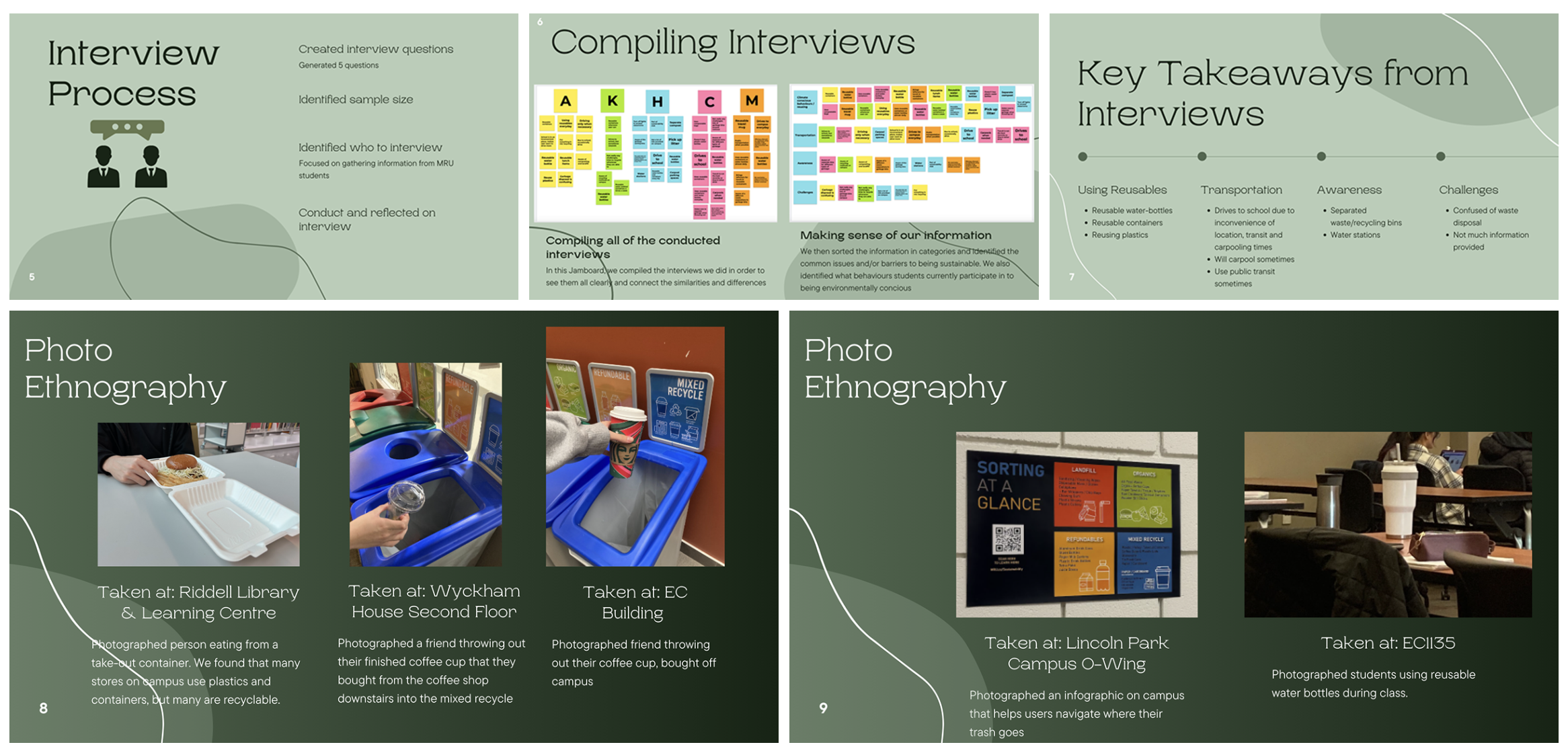
In the design research phase, my team aimed to understand the climate-conscious behaviours and attitudes of MRU students. To do this, we gathered insights by conducting interviews with open-ended questions and used photo ethnography to observe environmental interactions on campus.
One key insight from our research was that students felt overwhelmed by the perceived complexity of sustainable practices, which often deterred their efforts. This understanding informed the next stage of our design process by highlighting the need to simplify and make sustainable behaviours more accessible and relatable in our design solutions.
This phase of the project was done in collaboration with all group members, with me taking charge on the research analysis part.

2. Synthesis

We synthesized our research insights by creating a mind map, POV statement, and HMW questions to frame our design direction. Categorizing the findings into four themes—using reusables, transportation, awareness, and challenges—revealed key behavioural trends among MRU students. For example, understanding the barriers to using reusables informed our approach to designing interventions that address convenience and accessibility.
This phase was conducted by Michaela Tong and Hannah Vidallo.

3. Synthesis
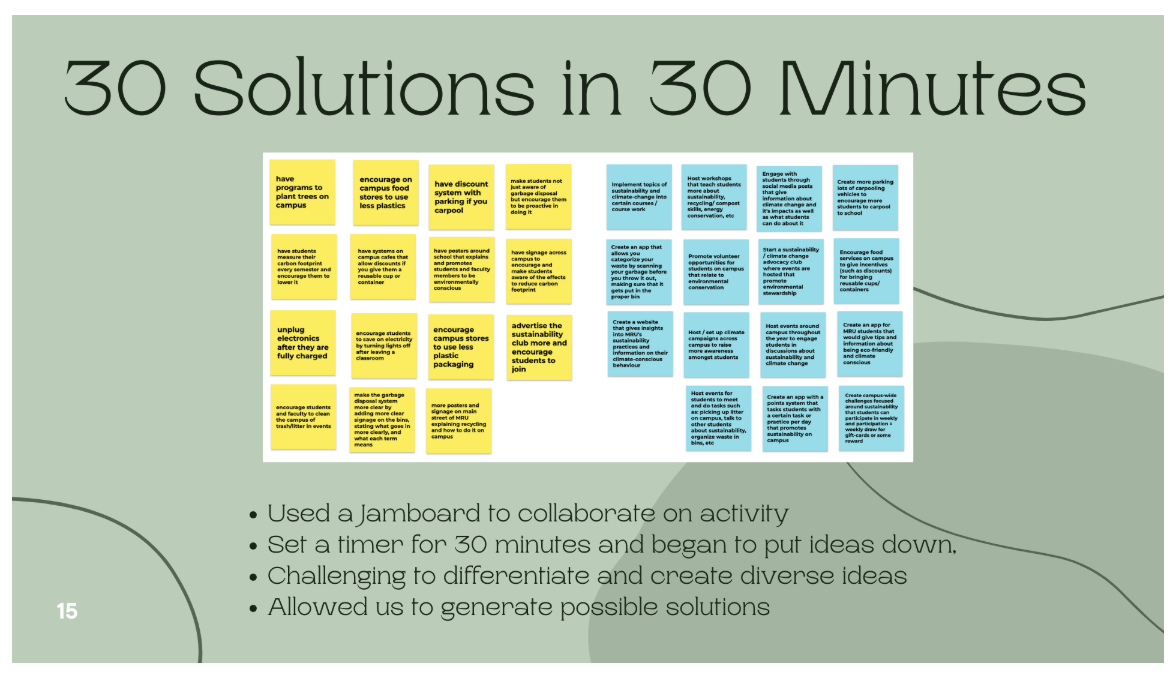
Building on our research, we used rapid ideation techniques to generate 30 ideas in 30 minutes, aiming to promote climate-conscious behaviors among MRU students. Concepts ranged from reducing plastic use in campus stores to raising awareness through event posters. This approach helped us explore diverse strategies and prioritize the most impactful, focusing on ideas that addressed key barriers identified in our research, such as convenience and visibility.
This phase of our design process was done by me in collaboration with Athena Moline.​​​​​​​

4. Concept Development

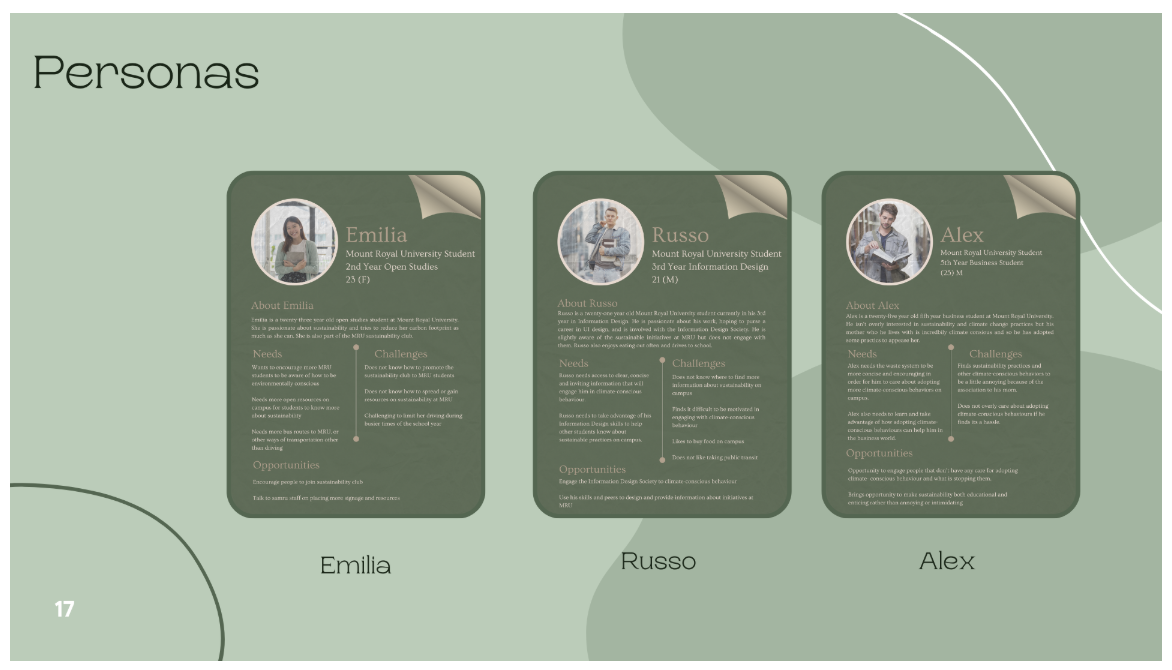
To humanize our design, we created three personas representing MRU students with different levels of climate-consciousness. Mapping their behaviors, challenges, and motivations deepened our understanding of their needs and perspectives. This empathetic approach enabled us to curate targeted solutions that address the diverse attitudes and lifestyle constraints of our audience.
This phase was completed by Athena Moline, Michaela Tong, and Hannah Vidallo.

5. Prototyping

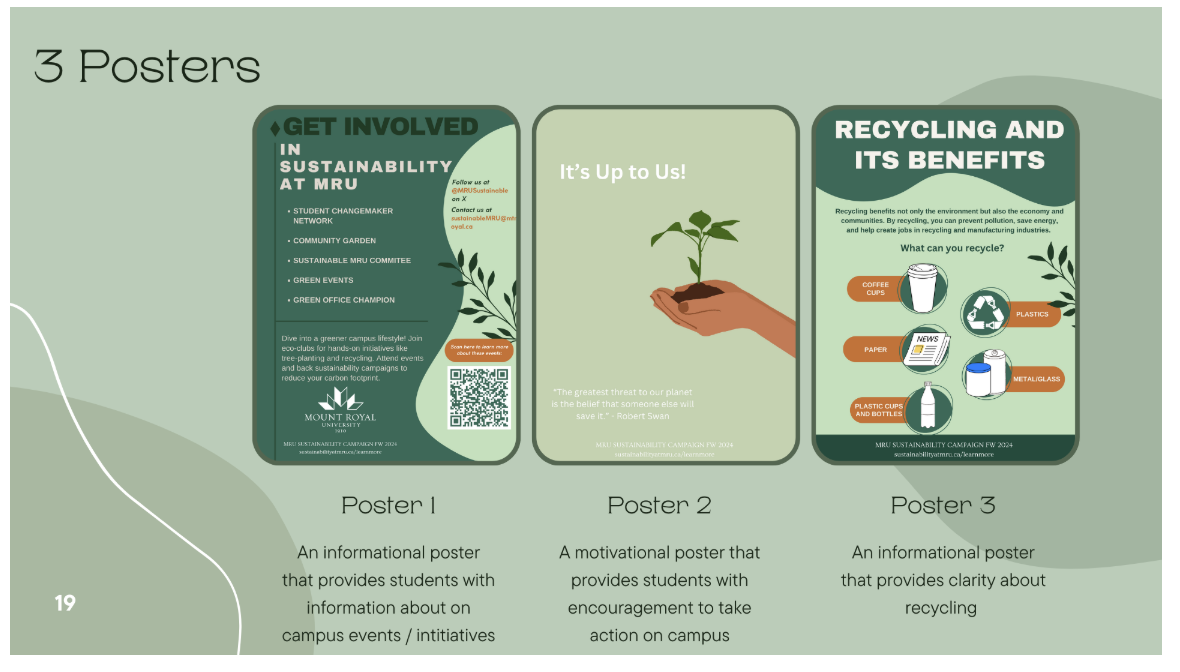
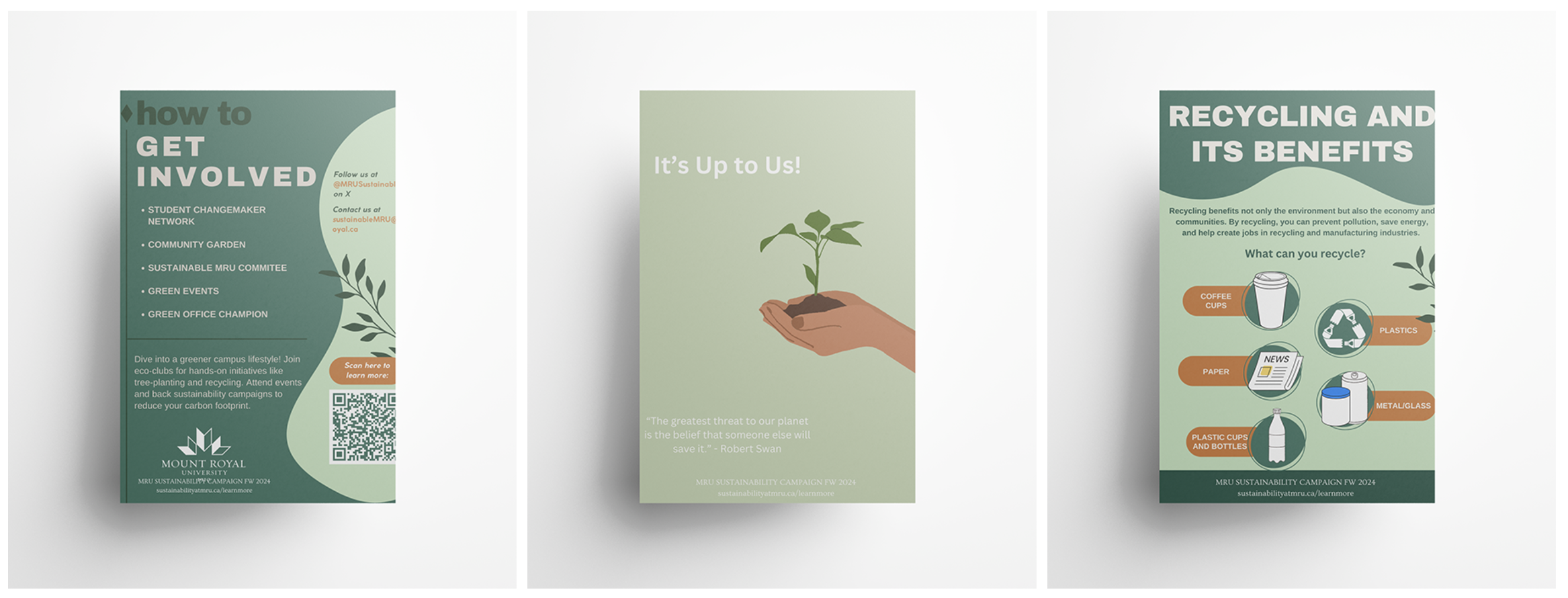
We developed low-to-medium fidelity posters as part of a cohesive campaign promoting sustainable practices on campus. Each poster had a specific goal: highlighting events and initiatives, encouraging climate-conscious actions, and clarifying recycling practices. This approach allowed us to address multiple aspects of sustainability, using our research insights to motivate and inform students effectively.
This part of the design process was done by me in collaboration with Kielyn Smith, and Athena Moline.

6. User Testing

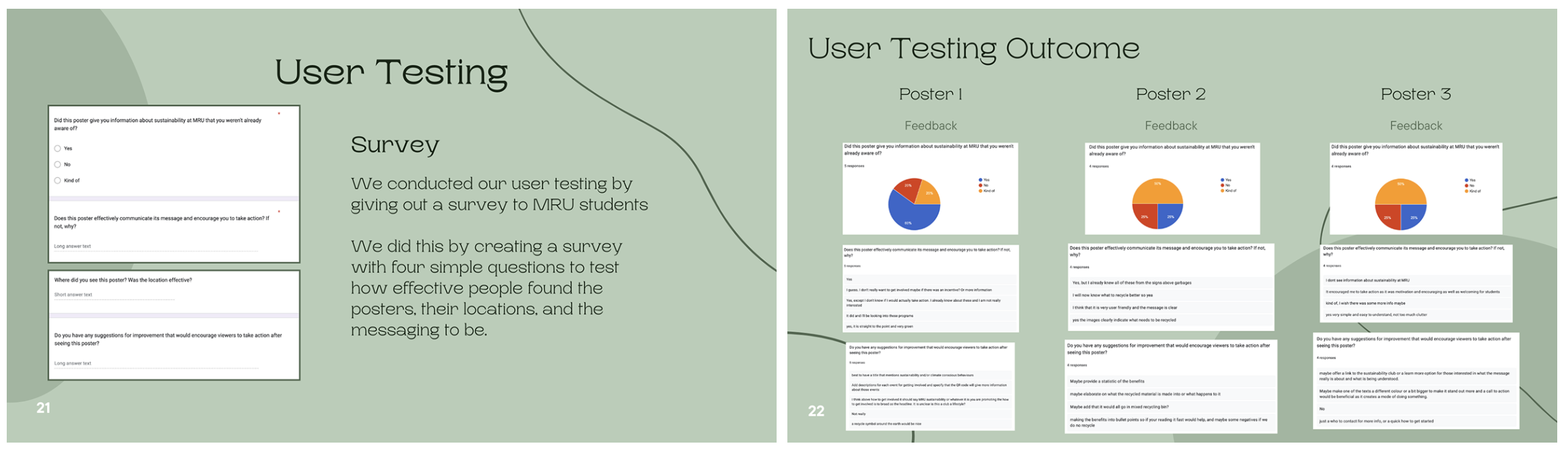
We developed low-to-medium fidelity posters as part of a cohesive campaign promoting sustainable practices on campus. Each poster had a specific goal: highlighting events and initiatives, encouraging climate-conscious actions, and clarifying recycling practices. This approach allowed us to address multiple aspects of sustainability, using our research insights to motivate and inform students effectively.
This part of the design process was done by me in collaboration with Kielyn Smith, and Athena Moline.

Final Product:

Results and Impact

Our project identified key barriers and motivators influencing climate-conscious behaviour among MRU students, guiding the creation of low-to-medium fidelity prototypes. The three poster designs received positive feedback, with testers noting improved clarity on sustainability initiatives and increased interest in sustainable actions. Though not physically tested on campus, survey responses confirmed the posters effectively communicated their messages and encouraged more sustainable behaviours. This project has the potential to foster climate-conscious behaviour at MRU and serve as a foundation for future sustainability campaigns.

Final Thoughts

This project was both challenging and rewarding, pushing us to navigate the complexities of designing for behavior change. A key challenge was balancing the diverse perspectives within our team. While aligning everyone’s insights was sometimes difficult, it ultimately strengthened our approach. Synthesizing broad research findings into targeted solutions required collaboration and compromise. Despite time constraints and limited testing, our teamwork allowed us to create a campaign that effectively addresses MRU students’ needs and promotes sustainable behaviors. This experience underscored the value of teamwork, empathy, and iterative design in tackling real-world issues.

Chiara Pravlik
Information Designer