
Information Design Brochure
In this project, I designed an information brochure for Mount Royal University’s Information Design program, aiming to connect with open studies students exploring their academic options. The project focused on applying principles of typography, layout, and audience-centered design.
My Problem Statement
How can I create an engaging, informative brochure that reflects MRU branding while appealing specifically to open studies students who may be considering the Information Design program?
The Process:
1. Building a Visual Language with Consistency
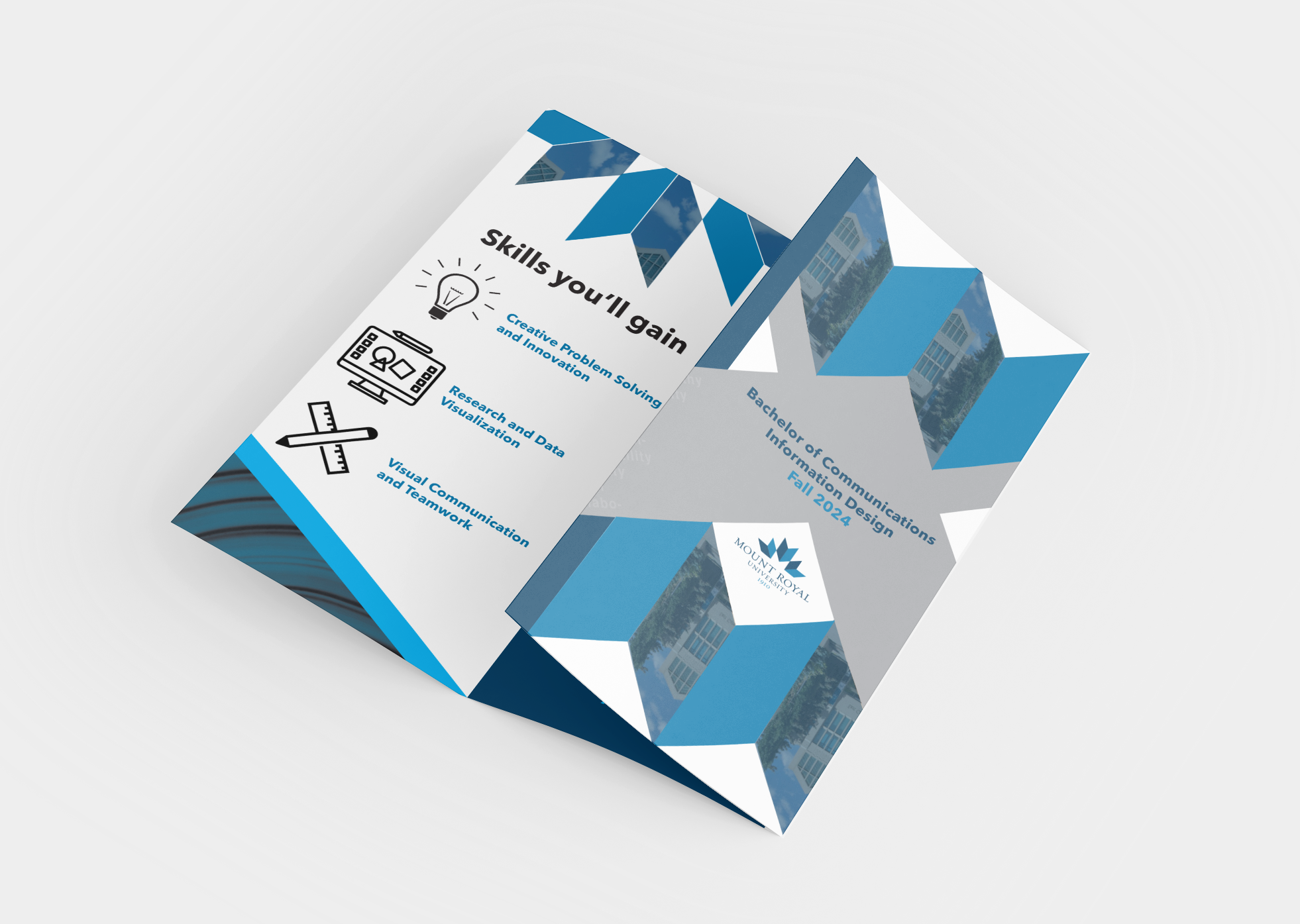
The first step in designing the brochure was applying MRU’s branding through typography and consistent styling. Drawing from typography principles, I selected Avenir and Helvetica, keeping the fonts consistent to reflect MRU’s visual identity. To ensure a professional, accessible look for open studies students, I used the 3 C’s: consistency, correctness, and clarity. This created a cohesive reading experience where all details, from grammar to formatting, aligned seamlessly. This careful use of type and branding laid a strong foundation, establishing familiarity for students exploring MRU’s Information Design program.
For example, in one section of the brochure, a consistent hierarchy differentiates section titles, headers, and body text. The headers are set in bold Avenir, while subtext uses regular Helvetica, creating a clear visual guide through each section without overwhelming readers.
2. Aligning for Impact
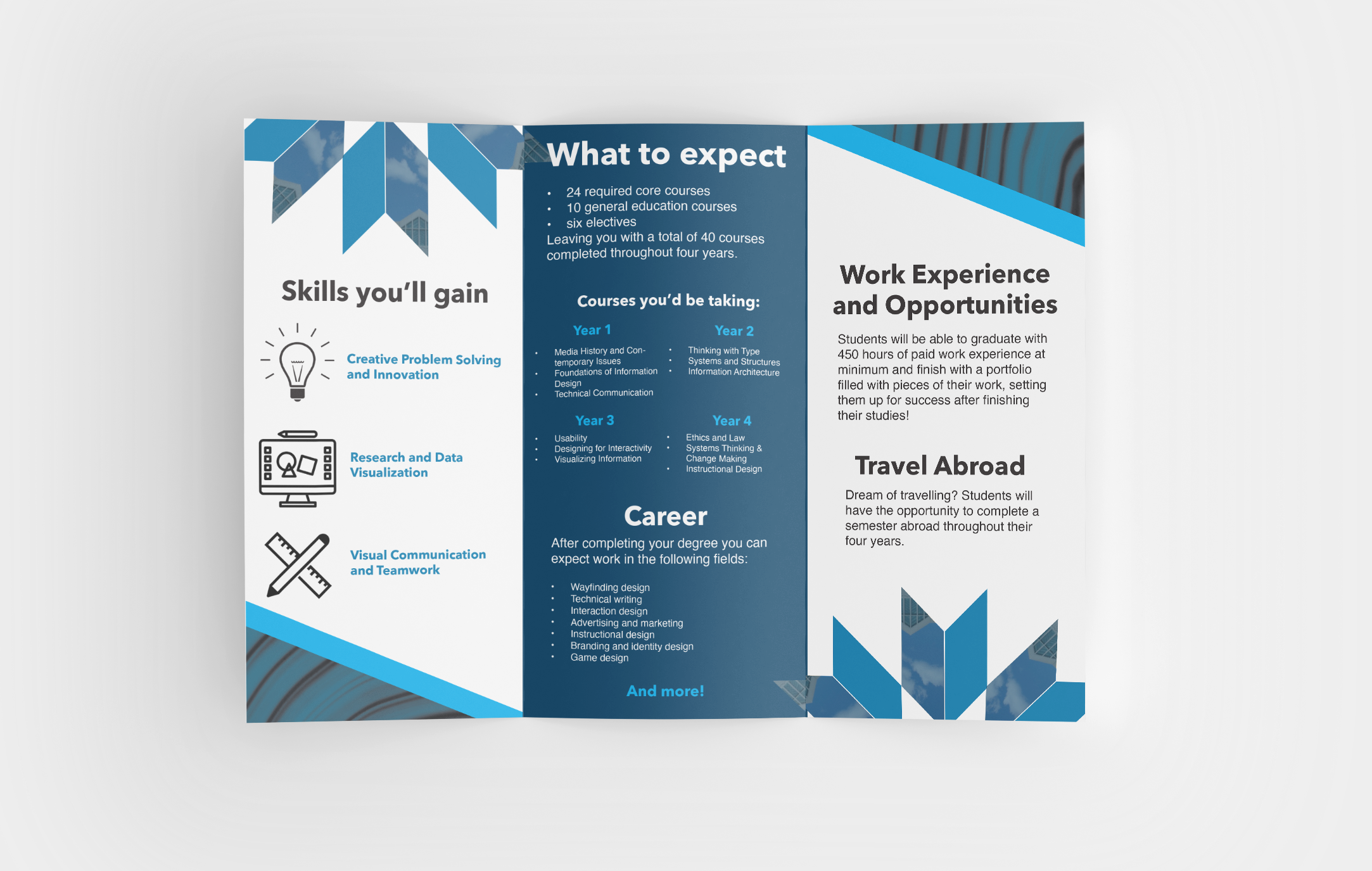
To make my brochure informative yet visually compelling, I relied on layout principles, particularly hierarchy and grid systems. Hierarchy helped prioritize key messages, guiding readers from the program definition down to opportunities like study abroad, careers, and course requirements. The grid layout helped place each element with precision, creating a balanced, symmetrical design. By giving each section a clear place, I could make critical information easy to navigate, ensuring students knew exactly where to find the details they’d need to make an informed decision.
For example, the “Skills You’ll Gain” section is positioned at eye level on the panel with a bolder header, making it easy to spot. The grid layout frames each section evenly, and the eye naturally follows the structure across the panels.
3. Connecting with Prospective Students
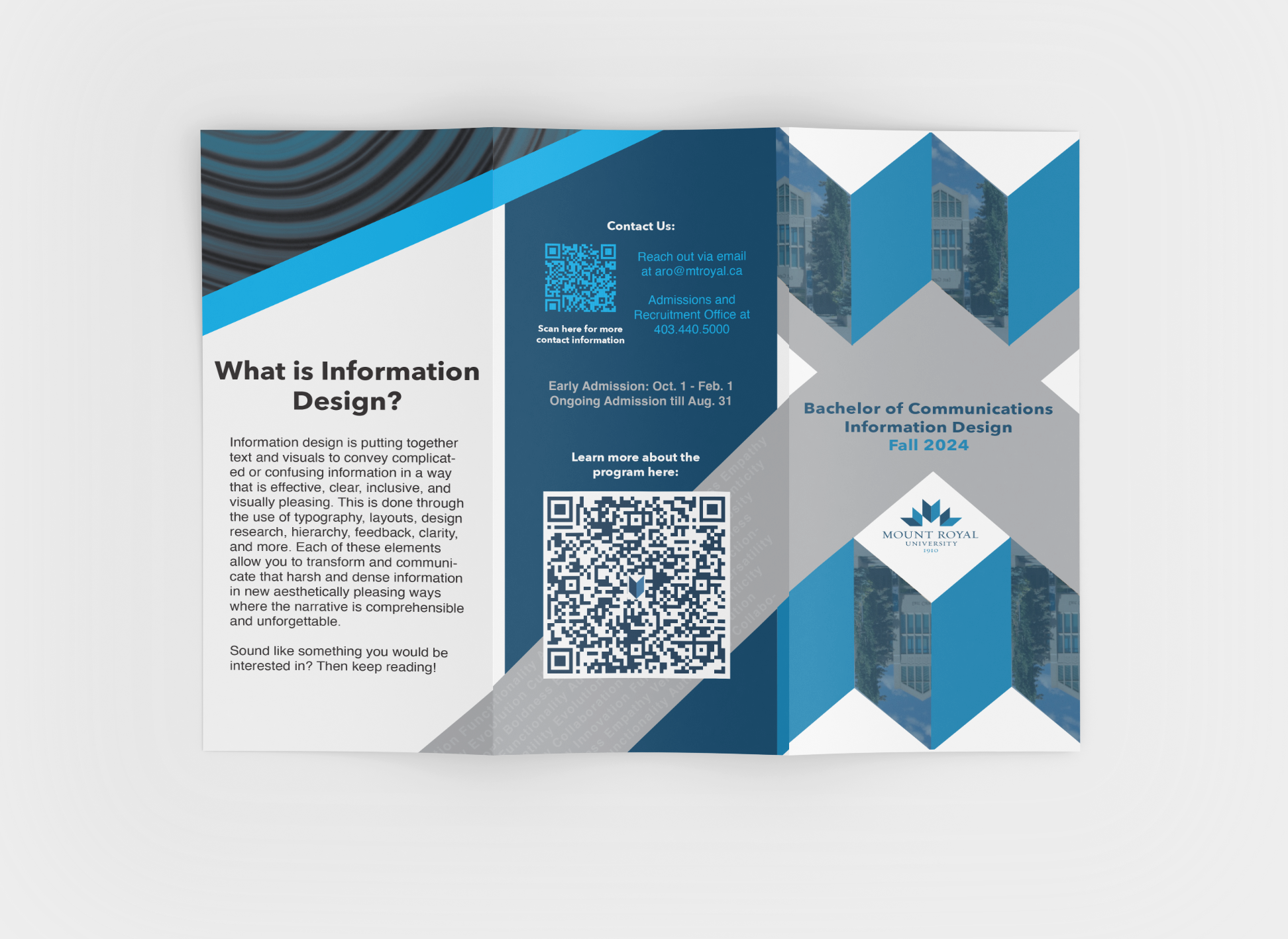
The brochure’s design and tone were made with open studies students in mind—those still figuring out their academic path. Reflecting my own experiences as a transfer student, I designed the text to be welcoming yet professional, adding elements like connecting lines and chevrons to convey a sense of direction and unity while staying in line with MRU’s branding. This “connectedness” mirrors the journey many students are on, exploring fields until they find their academic home. I included a QR code to lighten the text load, inviting students to discover more about Information Design at their own pace. This approach helped create a brochure that is both informative and approachable.
For example, the QR code links directly to MRU’s Information Design program page. It sits in the corner of the panel, with an icon and brief call-to-action (“Learn More”), inviting readers to scan without distracting from the main content.
Results and Impact
My brochure successfully presented the Information Design program at Mount Royal University in a clear and accessible way. Consistent typography and a clean layout ensured easy navigation, helping prospective students quickly grasp program details. Feedback praised its clarity, visual appeal, and user-friendly design, highlighting effective hierarchy and professional brand alignment.
Final Thoughts
Balancing information with visual clarity and cohesion was a major challenge, requiring multiple iterations and strategic content decisions. This project reinforced the importance of designing from the audience’s perspective and honed my skills in typography, layout, and content placement. Working creatively within MRU’s brand guidelines enhanced my understanding of how thoughtful design influences user engagement and information retention.